
Quota Seats Are a Minimum, Not a Goal
11/13/20253 min read
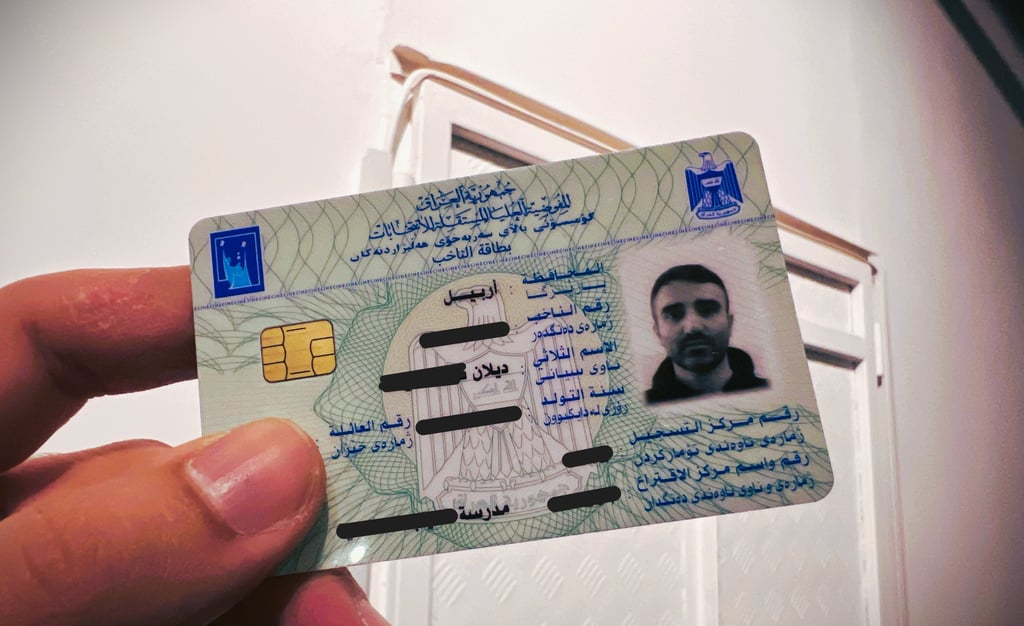
As after every election in Iraq or in the Kurdistan Region, many voices are raised to denounce the exploitation of seats reserved for the Christian quota, as well as other quota systems, by political parties.
The idea behind these complaints is always the same. Only Christian voters should be able to elect Christian representatives to the Iraqi Parliament. The reasoning is that the non Christian majority, being far more numerous, ends up determining the outcome of elections that are meant to represent the Christian component. As a result, Christians are deprived of genuine representation in the legislative institutions.
This argument seems fair, and I do not deny it. Non Christian voters necessarily influence the election results. However, it is important to understand what a quota truly means and what ideas it carries. It does not refer to the exclusive representatives of one segment of the population. It is simply a guarantee that this segment will be present in the parliament.
A simple way to understand this is to compare religious and ethnic quotas with the gender quota also established by the electoral law. Twenty five percent of parliamentarians must be women, and even forty percent in the Kurdistan Regional Parliament. Again, this is a minimum. Nothing prevents women from being fifty or eighty percent of the elected representatives. Does this mean that only women should vote for women? Or that women only represent the female population of Iraq? Or that a man should not vote for a woman if he prefers her to another candidate? Of course not. Such an idea would sound absurd.
The same logic should apply to Christian quotas. The law guarantees that five Christian representatives will indeed sit in the parliament, whatever happens. Nothing prevents them from being ten or fifty. What we must therefore understand and adjust is our own approach to the meaning of the quota and our collective ambitions. It would be rather unwise to limit our ambition to only five symbolic representatives among more than three hundred members of parliament. We are not marginal consultants participating in the affairs of a state that escapes us. We are not members of an isolated reserve who should live in a geographical or social bubble and never move beyond it.
On the contrary, we are legitimate at all levels, in all positions and in every public institution, just like anyone else, on the basis of competence and experience. Why should our ambition not go beyond those five seats?
It is important to remember that the main responsibility of a member of parliament is to vote on laws, and these laws apply to the entire Iraqi population. The vast majority of a parliamentarian’s work, regardless of their ethnic or religious background, serves everyone.
From that perspective, it seems natural that all voters should have the right to choose, sincerely, Christian candidates if they prefer them to others, and the reverse as well.
Where the problem arises is in the way political parties have chosen to use this mechanism to elect candidates affiliated with them. They exploit the guarantee provided by the quota system to increase the size of their parliamentary blocs, whether openly or indirectly.
Like any electoral law, none of them being perfect, there are loopholes that political movements inevitably exploit. These are electoral strategies, and they are inherent to parliamentary democracy everywhere. There is nothing new or shocking about this.
The real question is therefore not whether an elected member represents a specific population. Everywhere in the world, an elected official represents, in theory, only those who voted for them, if even that. The real question is about the nature of our ambition and how we envision our participation in Iraqi politics.
Other representative bodies exist, and other places of power or means of expression may be more relevant for defending the Christian or Assyrian Chaldean Syriac populations, as well as other communities. Parliament is only one form of political expression among others.
Finally, when it comes to the question of how votes should be distributed, several paths can be considered. One possibility could be to limit voters not by religious affiliation but by governorate. This would reduce the impact of purely manipulative voting. The other, which we can already apply without changing the electoral law, is to deepen our electoral strategy, both within our community and, more importantly, on a broader level as citizens among others. We should aspire to build a better country for all. Candidacies should be conceived beyond ethnic and religious boundaries, and this observation applies to all Iraqis. Only together can we move forward.