
Here Is How to Address the Prostitution Problem in Ankawa
2/17/20265 min read
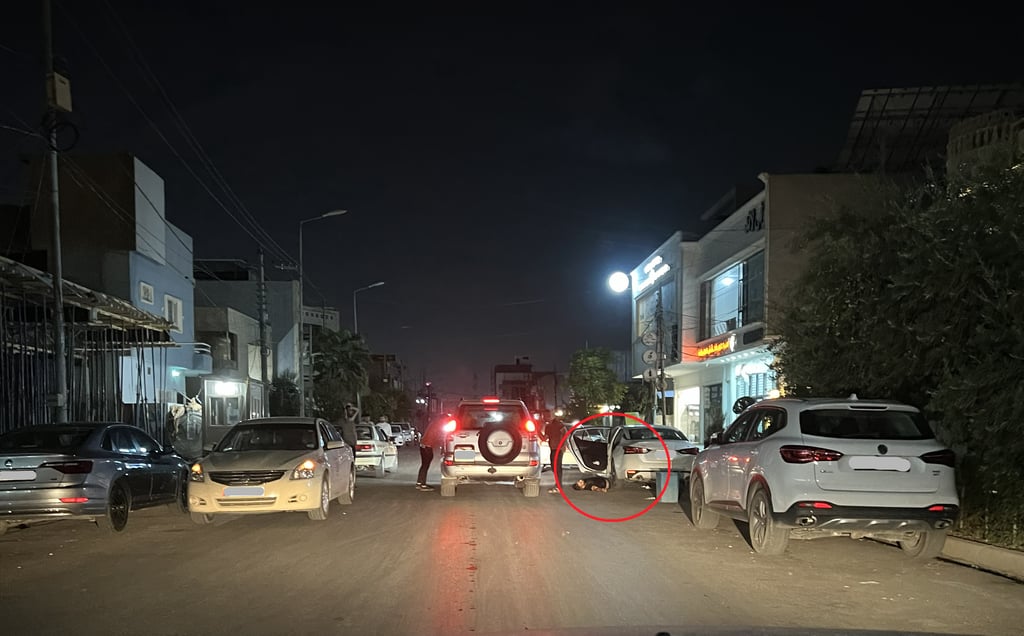
The spread of prostitution has progressively affected Erbil since the 2000s, and even more so Ankawa, where there is an abnormal concentration of such immoral establishments in what is historically a residential and family oriented area. It is possible to counter this phenomenon, but this first requires understanding its origins, then realistically analyzing the tools that are available today, and finally demonstrating strong political will from local decision makers supported by civil society. It is also important to clarify that this approach does not target sex workers themselves, who are often victims of poverty and sometimes of human trafficking. The real harm comes from the disturbances created by their clientele, which are severely damaging the daily lives of the city’s residents.
Today, prostitution operates through multiple types of venues, including dozens of hotels, beauty and massage salons, cafes, nightclubs, and bars. Some places combine several of these functions at once. A single establishment may operate both as a cafe and a nightclub, such as one located in the middle of Ankawa’s old district, or as both a nightclub and a hotel, as is the case with many venues along the Two Sides street. In total, around fifty establishments disrupt the city’s peace, attract thousands of clients daily, and generate noise pollution, security risks, and continuous harassment of local women and girls. For many customers, Ankawa has effectively become a large entertainment zone and nothing more, similar in perception to the red light district of Amsterdam. Each night, these clients cause traffic congestion, road disturbances, violent incidents among intoxicated individuals, sometimes involving weapons, and even the spread of drug use that is foreign to the community. Children are no longer safe, and residents can no longer walk freely.
Many people believe that closing these establishments would quickly restore calm. Unfortunately, the situation is more complex, and part of the responsibility lies within our own community. Some people from Ankawa or from nearby Assyrian-Chaldean villages chose to convert their land into hotels rather than homes, rented their properties to individuals involved in prostitution rather than to families, or expanded their businesses into immoral activities for financial gain. Since the 2000s, some local mayors and decision makers from within our own community have granted licenses for nightclubs, massage salons, and alcohol sales, sometimes in exchange for business shares or bribes. The desire for profit after thirteen years of embargo, combined with fragile moral standards among a small number of individuals, contributed to the situation we face today.
The difficulty is that many of these establishments now operate in a legally registered framework, with valid business licenses. The question then becomes how to close them, or at least significantly reduce their activity. There are, in my view, three strategic levers that can be used effectively. These are stricter enforcement of existing laws, public awareness and mobilization campaigns, and additional local decisions aimed at reducing Ankawa’s attractiveness for immoral businesses and their clientele.
Using Existing Legal Tools to Reduce the Operational Capacity of Prostitution Venues
First, both Iraqi law and the legal framework in the Kurdistan Region already provide mechanisms to impose restrictions on such establishments. Law No. 8 of 1988, updated in 2024, strictly prohibits prostitution and allows legal action against sex workers, intermediaries, and clients. Although this law can be difficult to apply in practice, it can at least be used to place pressure on establishment owners by initiating multiple judicial investigations. The Ankawa municipality or any other legal entity can act as a complainant in such cases. This law would enable investigations particularly against more discreet prostitution venues, such as low-quality motels or massage salons, including those located on the street between Muntaza street and the traffic light area.
Another legal instrument can be applied more immediately. Law 41 of 2015 on noise control provides for financial penalties and administrative closures for establishments that create excessive noise disturbances. The Iraqi Penal Code of 1969 and Environmental Law 27 of 2009 also allow legal action based on public order disruption or threats to public health.
This 2015 law is particularly relevant because it defines precise noise limits measured in decibels. Hotels are limited to fifty decibels during the day and forty at night. In Ankawa, dozens of hotels host so called parties that function in reality as prostitution meeting spaces, where noise levels often exceed one hundred or even one hundred twenty decibels. These levels are not only illegal but also dangerous to human health. Applying this law would allow authorities to systematically sanction these hotels, which operate as large nightclubs rather than as places of accommodation. By strictly controlling noise levels and consistently enforcing penalties, the attractiveness of these venues for clients would automatically decline.
This approach would significantly reduce disturbances across Ankawa while avoiding long and ineffective administrative closure procedures. In practical terms, hotels would be required to function only as hotels, meaning places of rest and tranquility. The impact of such enforcement could be both immediate and substantial.
Conducting City Wide Awareness Campaigns
The message must be clear and firm. Clients seeking prostitution are not welcome in our city. The municipality should use public advertising spaces to communicate this message, along with distributing informational materials emphasizing public tranquility, Ankawa’s Christian heritage, and the reality of female sexual exploitation. Public demonstrations could also be considered, although such actions often become politicized and risk being used by various political factions. This issue must remain framed as one of public order and social protection. Civil society can contribute through social media campaigns and regular awareness efforts directed at drivers entering the city.
Additional Local Decisions to Reduce Ankawa’s Attractiveness for Such Activities
A decision taken by the municipality about a year ago demonstrated the potential effectiveness of local measures. At that time, all establishments were required to close at three in the morning. Nightclubs and related venues immediately had to comply. This resulted in a noticeable pattern, with a surge of traffic at closing time followed by relative calm for the rest of the night. This measure could be strengthened by reducing closing hours further, for example to two in the morning, and even earlier for hotels where prostitution is most concentrated. Such restrictions would significantly reduce Ankawa’s appeal for these activities, pushing them toward non residential zones outside the city. The objective of these operations cannot be to eliminate the activity entirely, which would be unrealistic, but to ensure that it no longer exists among our homes, schools, and families.
The stakes of this issue are as profound as the causes of this phenomenon. They concern the survival of a residential area that has existed for centuries, the protection of residents’ tranquility, and the preservation of a refuge for Assyrian Chaldean Syriac communities with their Christian values and cultural traditions.
Local decision makers therefore carry an urgent responsibility. Failure to address this problem today would effectively mark the end of Ankawa as a historic center of cultural and religious heritage. If this situation is not confronted quickly, even more residents will choose to emigrate, as this refuge will cease to be their home and will instead become merely an entertainment zone for visitors from across the country.
Image of a drunk man lying on the ground outside a place of prostitution in Ankawa, 2023